The 2026 Australian Truck Buyer Kit
GVM, NB1 vs NB2, towing, payload, and real-world build planning — before you spend serious money. Choose the right truck class, understand what happens once it's loaded, and get the compliance and engineering questions answered before the deposit.
Why this guide exists
Most truck buying content is either too generic to be useful or too technical to be practical. This guide is designed for the moment most buyers actually find themselves in: you are researching, comparing, or about to put money down, and you want to avoid making an expensive decision too early.
The same concerns come up again and again in the Australian market: towing reality versus brochure numbers, whether a 1500 is enough, when a 2500 or 3500 makes more sense, how GVM and compliance fit into the picture, and how to plan the build so you are not paying twice.
The goal is simple: help you ask better questions, narrow the field faster, and get into the right truck for the way you actually plan to use it.
Five questions to answer before you leave a deposit
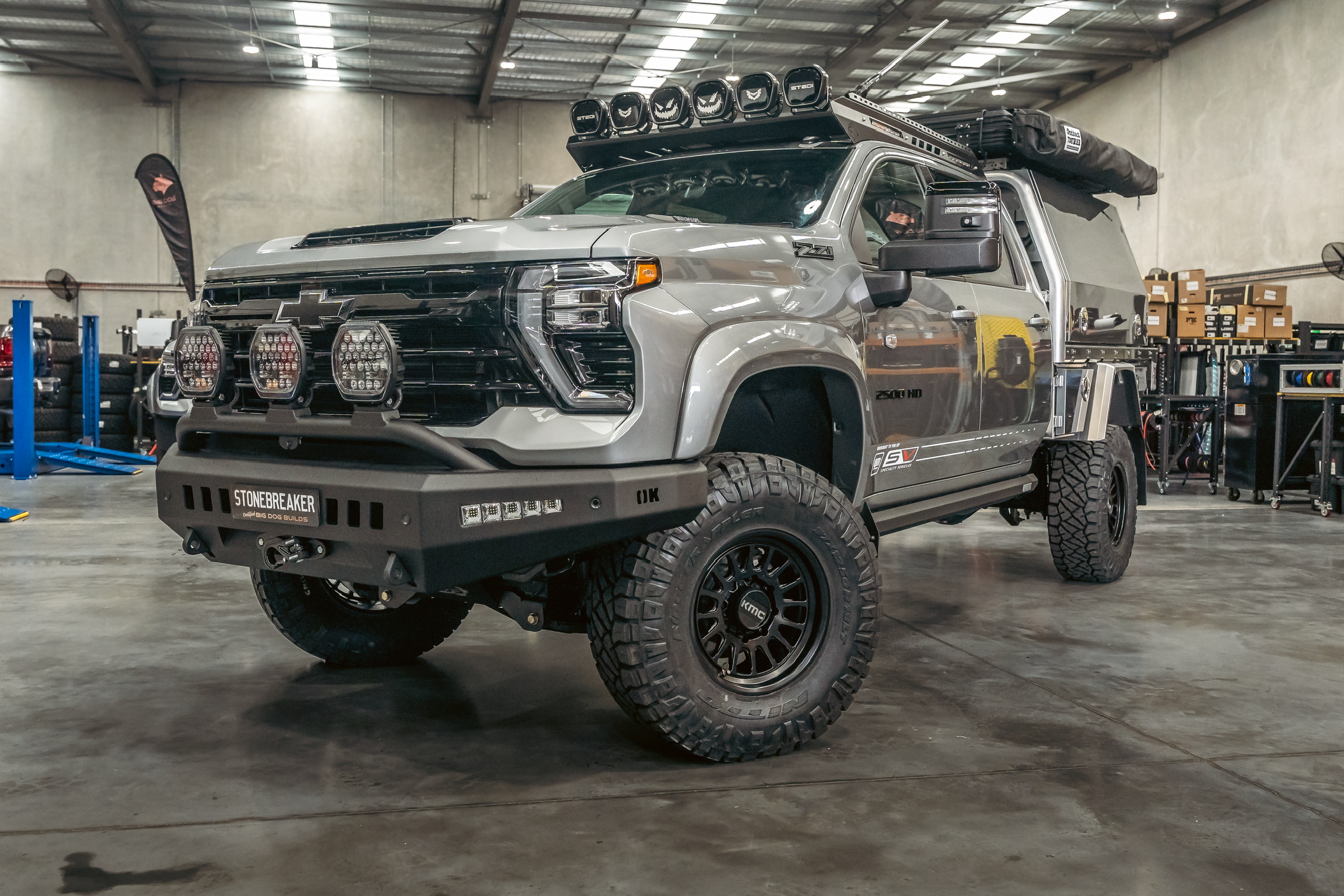
Each question deserves a real answer before you sign anything. If two or more are unclear, the deposit is too early.
Start here. These five questions will tell you more about the right truck than any brochure, YouTube review, or Facebook group ever will.
1 · What are you really towing — and how often?
A weekend boat is a very different job from a full-time touring van, a horse float, or a loaded work trailer. Start with the real load, the frequency, and the comfort margin you want when conditions are not perfect.
2 · What else will live on the truck?
Passengers, canopies, trays, tools, batteries, inverters, fridges, water, recovery gear, roof systems and accessories all add weight. Buyers often think about the trailer first and forget how quickly the supporting setup adds up.
3 · Is this truck for now, or for the next two years?
Many buyers plan to tow first, then add touring, then add power, storage, or work equipment. If your use is evolving, buy for the future state rather than the first month of ownership.
4 · How important is legal confidence?
Registration pathway, engineering, GVM-related questions, interstate travel confidence and insurance peace of mind are not afterthoughts. They should be part of the decision before the deposit, not after it.
5 · Do you need the full build now?
A staged build can be the smartest way to buy — as long as it is planned properly. The right stage-one setup gives you a strong, safe base without boxing you into expensive rework later.
The simple framework: 1500 vs 2500 vs 3500
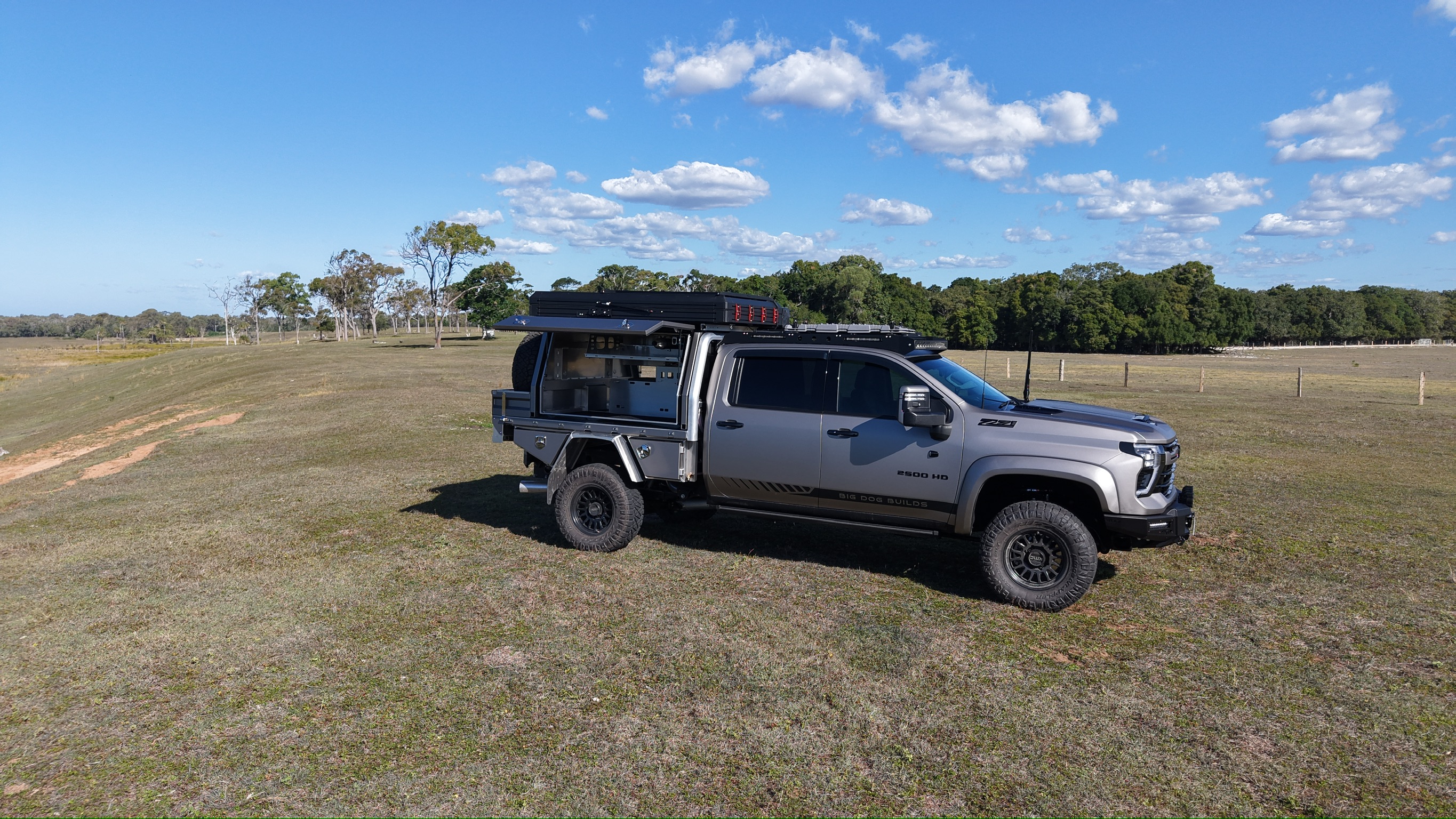
Capability bars are illustrative — the right class for you depends on real loaded weight, not brochure ratings. Chapter 8 walks through the maths.
This is the question many buyers should answer first. The right class depends less on image and more on load reality, towing expectations, upgrade plans, and how much comfort margin you want built into the platform.
Best fit · lifestyle, family touring, lighter towing, daily-driver balance
Why buyers choose it: Comfort, usability, lower step-up. Suits buyers not towing at the top end all the time. Still requires real payload math.
Watch-outs: Can run out of comfort margin once heavy towing, accessories, and future upgrades pile on.
Best fit · serious towing, touring, and buyers who know accessories and tow-ball load will grow
Why buyers choose it: Often the sweet spot for larger vans or more capable setups. Better base for buyers already close to the limit.
Watch-outs: Higher buy-in and size jump. Needs an honest view of real use to justify it.
Best fit · maximum margin, heavier tow applications, canopy-heavy / commercial / rural edge cases
Why buyers choose it: Chosen when buyers want headroom, robustness, or know the platform has a hard job to do. Doesn't want to buy twice.
Watch-outs: Overkill for some users. Best when it matches a genuinely heavy or future-heavy use case.
The simple decision rule
- If you are buying mostly for comfort and lighter-duty mixed use, start with 1500.
- If the truck's main job is serious towing and touring, 2500 often deserves an early look.
- If you know the setup will be heavy, demanding, or commercial/rural in nature, 3500 should be considered early rather than late.
Which truck suits which job?
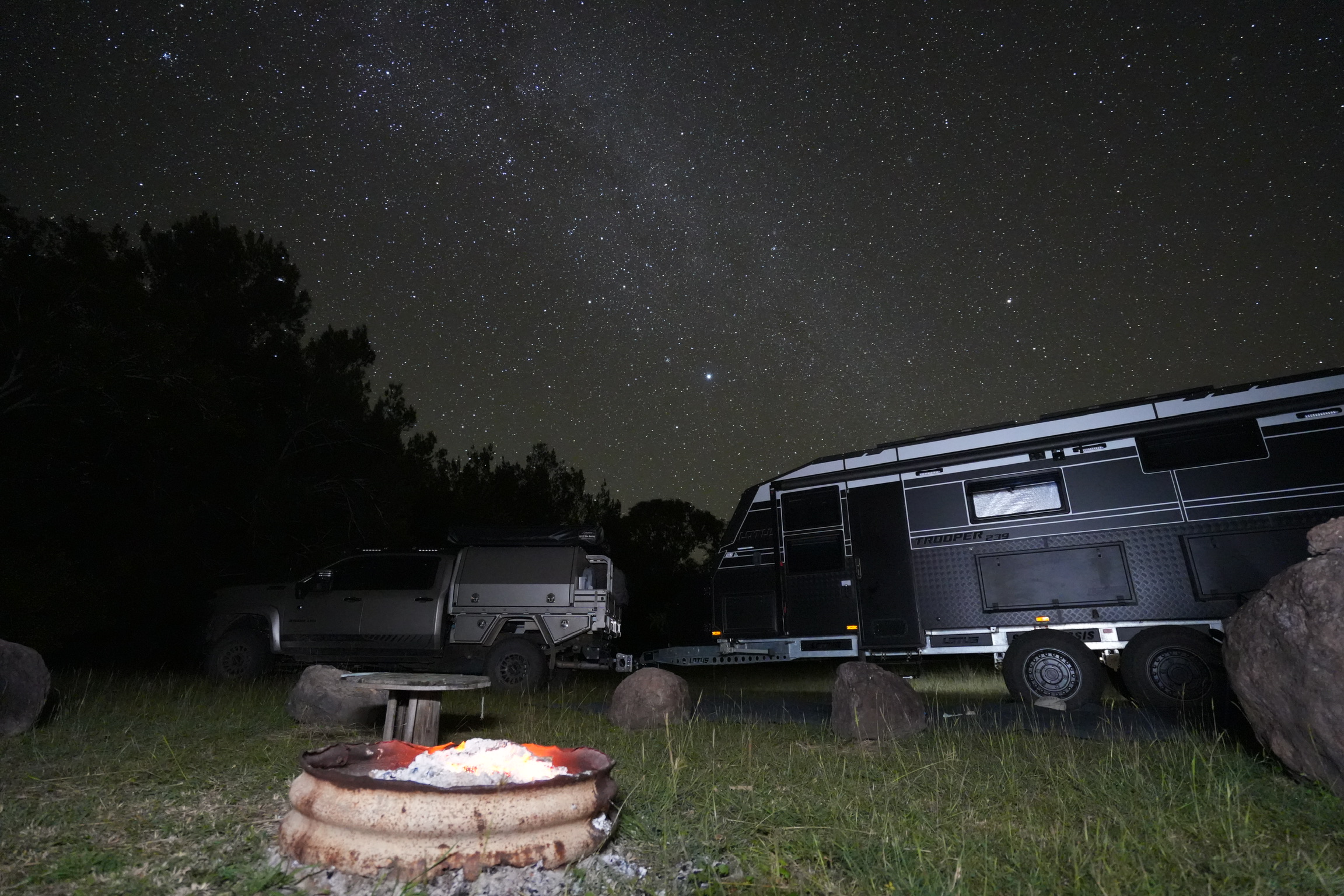
Different use cases need different trucks and different build paths. Here's what matters for each one.
Family touring and holiday towing
These buyers want a truck that tows confidently, still works for day-to-day life, and can grow into a better touring setup over time. Comfort, cabin practicality, and stage-one upgrade planning matter a lot.
Big caravan touring
When the van is large and the travel is regular, truck selection should be driven by real-world towing composure, reserve capacity, and how the whole setup will feel once passengers, gear and future accessories are onboard.
Remote and premium touring
These buyers care about range, storage, electrical systems, communications, confidence in isolated areas, and a tidy, high-functioning build. The truck is part of a bigger system, not the whole story.
Rural and heavy-tow use
Farms, property work, horse floats, heavy trailers and long distances push buyers toward platforms with more headroom, durability and easier confidence under load.
Commercial and fleet use
Downtime, durability, repeatability, payload reality and sensible spec choices matter more than lifestyle image. The truck needs to perform, stay serviceable and suit the actual work pattern.
The 4.5 tonne cliff · why so many buyers get caught here
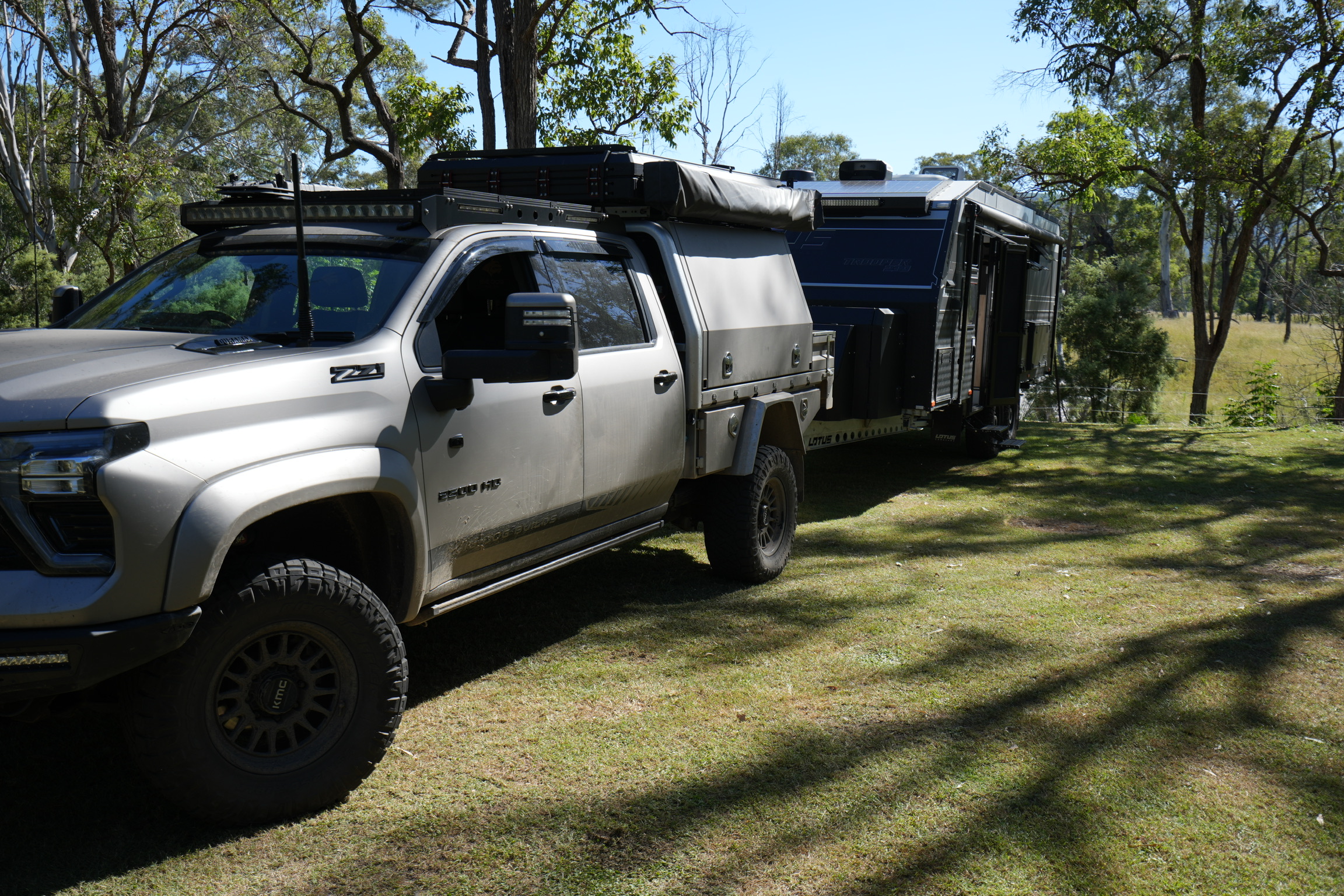
- Drive on a standard licence
- Simpler registration + insurance
- Limited payload headroom
- Accessories eat margin fast
- Significantly more payload
- Changes rego conversation
- Often smarter for serious tow / tour
- Margin for future upgrades
In Australia, 4.5 tonnes GVM is the threshold between a vehicle you can drive on a standard car licence (Class C) and one that requires Light Rigid (LR) or higher.
This is one of the biggest hidden buying barriers in the Australian truck market. Understanding it early can change your entire purchasing decision.
Why 4.5 tonnes matters
In Australia, 4.5 tonnes GVM is the threshold between a vehicle you can drive on a standard car licence (Class C) and one that requires a Light Rigid (LR) licence or higher.
Many buyers start with "car licence" logic — assuming their truck will stay under 4.5 tonnes once built. But once you add a canopy, tray, batteries, fuel, passengers, recovery gear, and the tow-ball download from the trailer, the real loaded weight can be very different from the factory kerb weight.
The truck you can technically buy is not always the right truck for the build you are planning.
Car-licence side
- Driveable on a standard Class C car licence
- Simpler registration and insurance pathway
- Limited payload headroom once built
- Accessories eat into margin faster than expected
LR-licence side
- Requires LR licence (or higher) in most states
- Significantly more payload headroom
- Changes registration and rego conversation
- Often the smarter path for serious tow/tour builds
The trap
Factory towing numbers often give buyers confidence that their truck can handle the job. But towing capacity is only part of the story. Once payload, tow-ball download, accessories, passengers and fuel are factored in, many buyers discover they are either right at the limit or already past it — often without realising.
Registration, engineering and licensing pathways can vary by state and use case. Always confirm details for your exact setup with a qualified specialist.
NB1 vs NB2 in plain English
These are official vehicle categories under Australia's ADR system. Understanding them early can prevent the most expensive re-buy decisions.
Often the starting point
- Attractive for buyers wanting car-licence-style ownership
- Less payload headroom than most expect once real weight is added
- Often the starting point, but can become the limiting factor
- Suitable when the truck won't be heavily accessorised or loaded
Often the smarter answer
- Significantly more payload headroom for accessories and load
- Changes the licensing / registration / rego conversation
- Often the smarter answer for serious heavy-tow or full-tour builds
- Provides margin for future upgrades without re-engineering
When NB2 deserves a closer look
- You are planning a canopy, tray, batteries, long-range tank, and towing setup
- Your trailer's tow-ball download is significant (many vans deliver 250–400kg+)
- You are carrying passengers, gear, water, and recovery equipment regularly
- You want margin to add accessories over time without re-engineering the truck
- You are doing full-time touring or heavy rural/commercial work
NB1 vs NB2 is not just a compliance decision — it is a buying-stage segmentation decision. Getting it right before you order often prevents the most expensive changeover decisions later.
Registration, engineering and licensing pathways can vary by state and use case. Always confirm details for your exact setup with a qualified specialist.
What actually counts toward GVM?
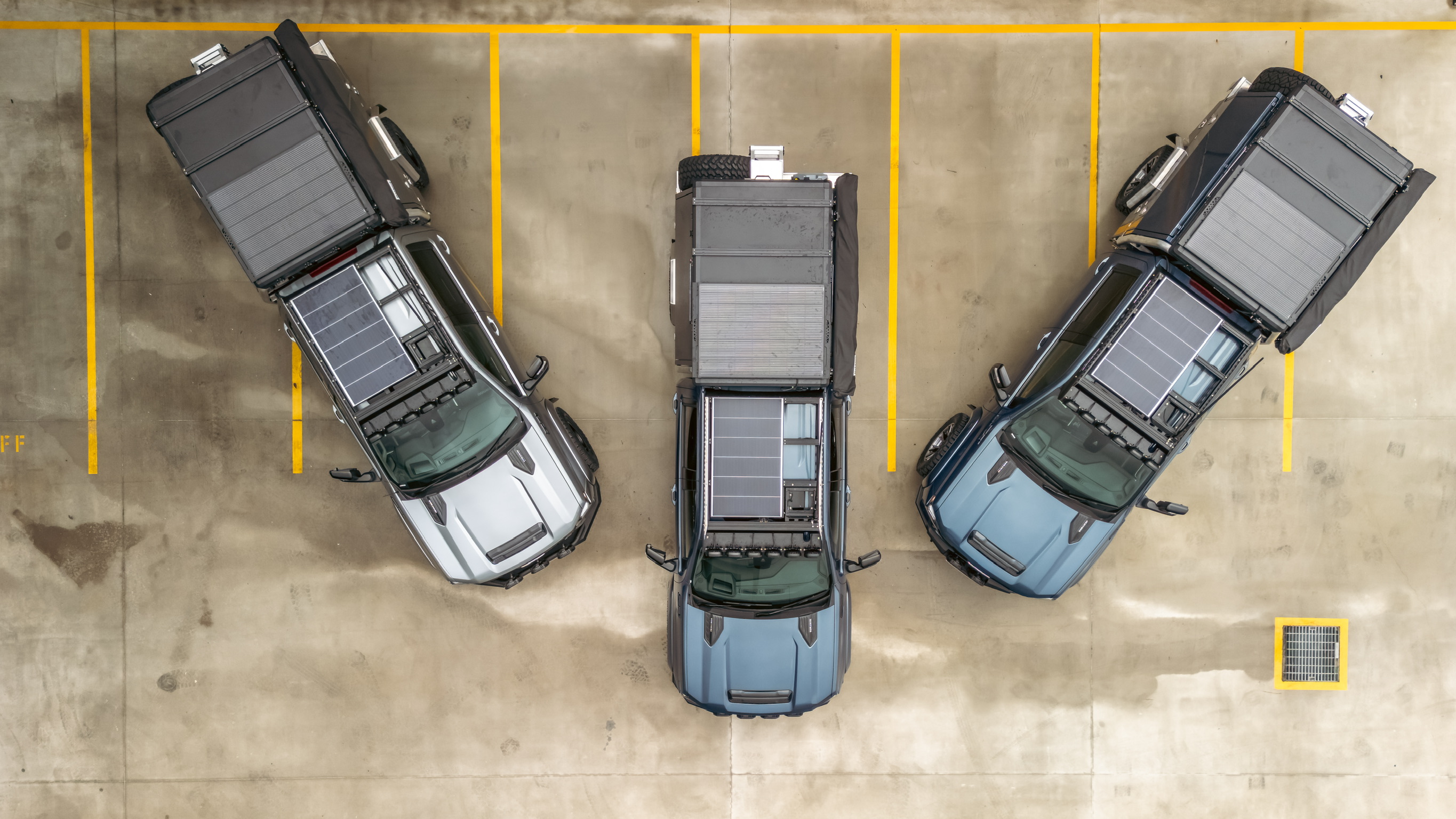
A 1500-class truck typically has ~900-1,000kg factory payload. The maths often doesn't work without a GVM upgrade.
GVM is not just 'stuff in the tray.' It includes everything the truck carries — including things most buyers forget.
Your van doesn't only affect what the truck can tow. It also affects what the truck can legally carry.
- People — Driver + passengers, typically 75–100kg per person
- Fuel — Standard tank + any long-range tank additions
- Canopy / tray / drawers — Often 300–600kg+ depending on spec
- Batteries / inverter / wiring — Lithium systems, DC-DC chargers, solar regulators
- Long-range fuel tank — Fuel weighs ~0.85kg per litre; a 180L tank adds significant weight
- Bar work / steps / racks — Bull bar, side steps, roof rack, ladder rack
- Luggage / recovery gear — Tools, jacks, recovery boards, snatch straps, compressors
- Fridge / compressor / tools — Often underestimated in total combined weight
- Tow-ball download — The portion of trailer weight carried by the truck — typically 8–15% of trailer ATM
The hidden weight trap
Toyota, Ford, RAM and GMSV all explicitly state that GVM includes kerb weight plus passengers, luggage, accessories, tow bar and tow-ball download. You cannot assume maximum payload and maximum towing at the same time. Accessories, passengers, luggage, fuel and tow-ball weight all matter — and they all come off the same available payload figure.
Weight figures are illustrative. Always verify against manufacturer specifications and your specific vehicle's compliance plate.
Why tow-ball download changes everything
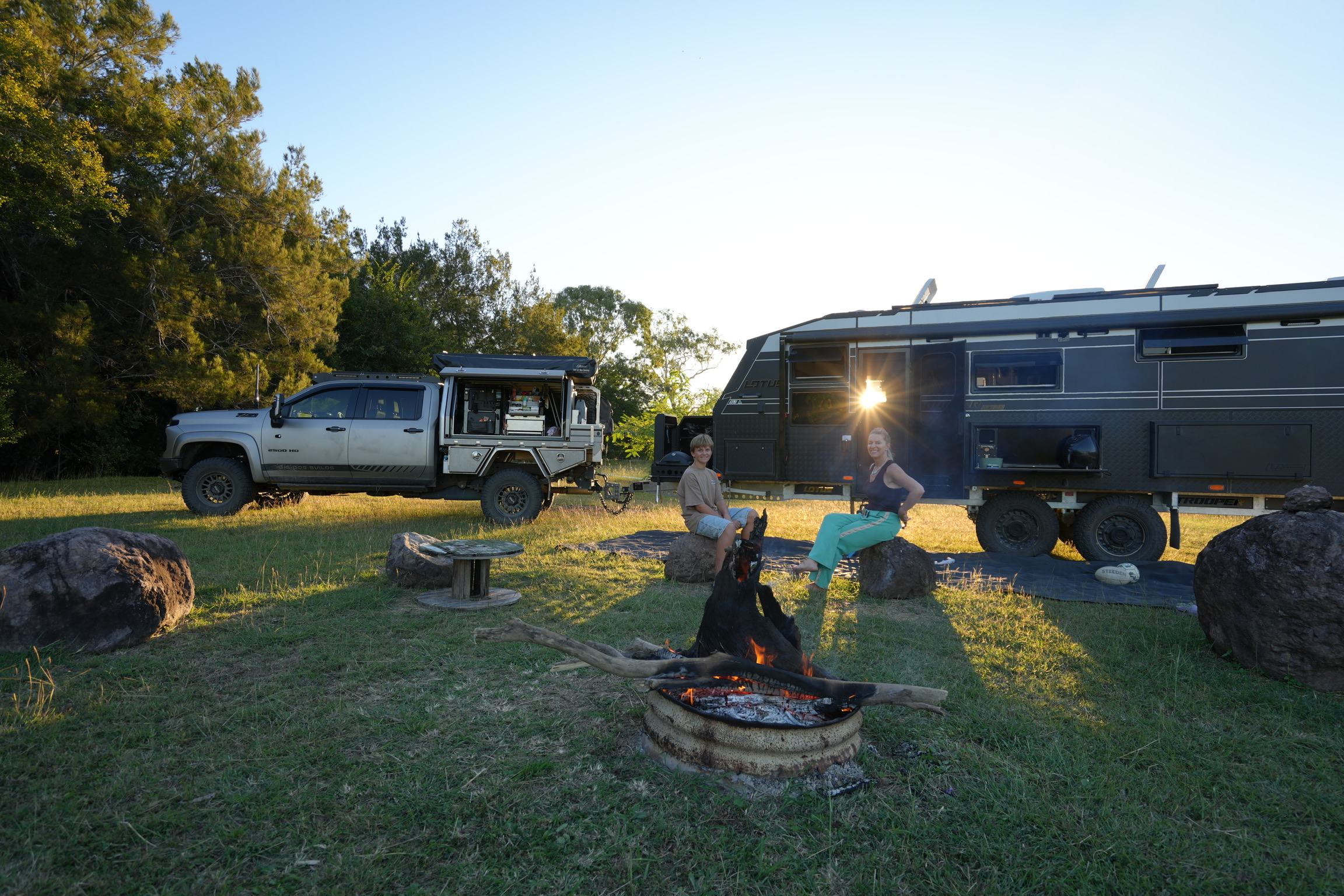
A 3,500kg ATM van delivers 280-525kg of vertical force onto the back of your truck through the tow ball · that weight counts directly against your truck's available payload, not against its towing capacity.
This is the single most overlooked weight in the entire buying conversation. Most buyers think about what the truck can tow — but forget what the trailer pushes back onto the truck.
What is tow-ball download?
Tow-ball download (also called tow-ball mass or tongue weight) is the vertical weight your trailer pushes down onto the back of the truck through the tow ball. It is typically 8–15% of the trailer's ATM (Aggregate Trailer Mass).
This weight counts directly against your truck's available payload — not against your towing capacity.
| Trailer ATM | Tow-ball download range | Example |
|---|---|---|
| 2,500kg | 200–375kg | Common mid-size touring van |
| 3,500kg | 280–525kg | Larger family touring van |
| 4,500kg | 360–675kg | Horse float, large van, or work trailer |
Why this matters so much
A 3,500kg caravan can push 280–525kg onto the back of your truck. If your truck has 900kg of available payload and you're already carrying passengers, fuel, canopy, and gear, that tow-ball download can push you past GVM — even though the truck technically has the towing capacity to pull the trailer.
Toyota, Ford, RAM and GMSV all explicitly state that tow-ball download must be included as part of the tow vehicle's GVM calculation. It is not optional. It is not separate. It comes off your payload.
Tow-ball download ranges are indicative (8–15% of ATM). Always check the trailer manufacturer's specification for actual tow-ball weight.
Payload math most buyers miss
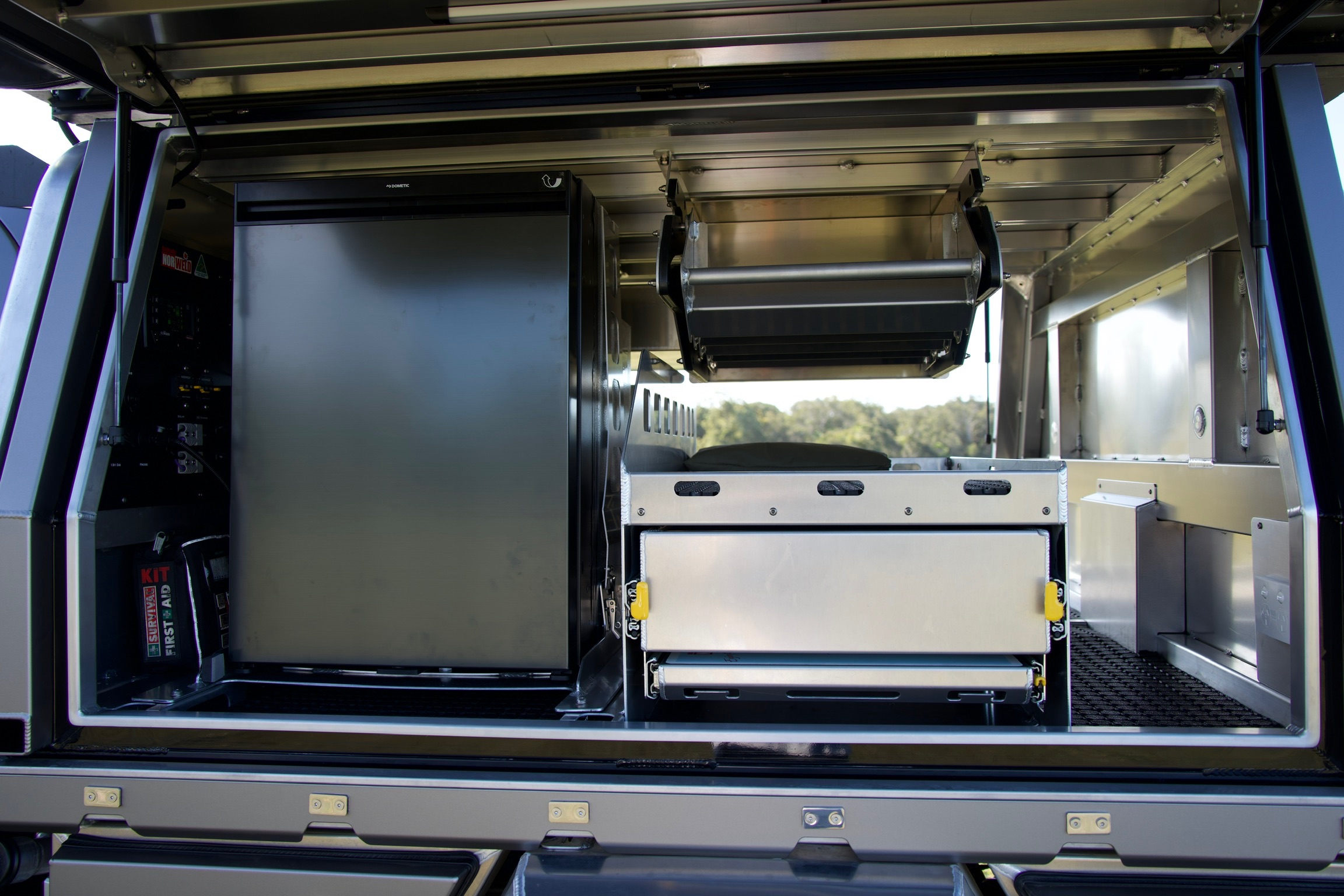
Numbers are illustrative averages from real BDB quotes. Your exact figures depend on truck spec, accessories chosen, and trailer ATM. Tow-ball download is 8–15% of trailer ATM.
A truck can be 'rated to tow it' but still be the wrong truck once loaded. Here's why.
Scenario · Family of 4 + 3.5T caravan
- 4 passengers (~300kg)
- Canopy + drawers (~350kg)
- Fuel, water, recovery gear (~100kg)
- Tow-ball download from van (~350kg)
Total on-truck load: ~1,100kg before luggage. Many 1500-class trucks have factory payload around 800–1,000kg. The maths often doesn't work without a GVM upgrade.
Scenario · Full touring (canopy + lithium + drawers)
- 2 passengers (~150kg)
- Full canopy setup + drawers (~500kg)
- Lithium power system + solar (~80kg)
- Long-range tank, water, recovery (~200kg)
- Tow-ball download from van (~400kg)
Total on-truck load: ~1,330kg. This is where NB2 often becomes the right answer.
Scenario · Rural operator (tray gear + float)
- 1–2 passengers (~150kg)
- Heavy-duty tray + toolboxes (~600kg)
- Equipment, fencing, supplies (~200kg)
- Tow-ball download from float (~350kg)
Total on-truck load: ~1,300kg. Rural buyers often need 2500 or 3500 class sooner than they expect.
Weight examples are illustrative and will vary based on specific vehicle, accessories, and configuration. Always verify against your vehicle's compliance plate.
Does a GVM upgrade change GCM?
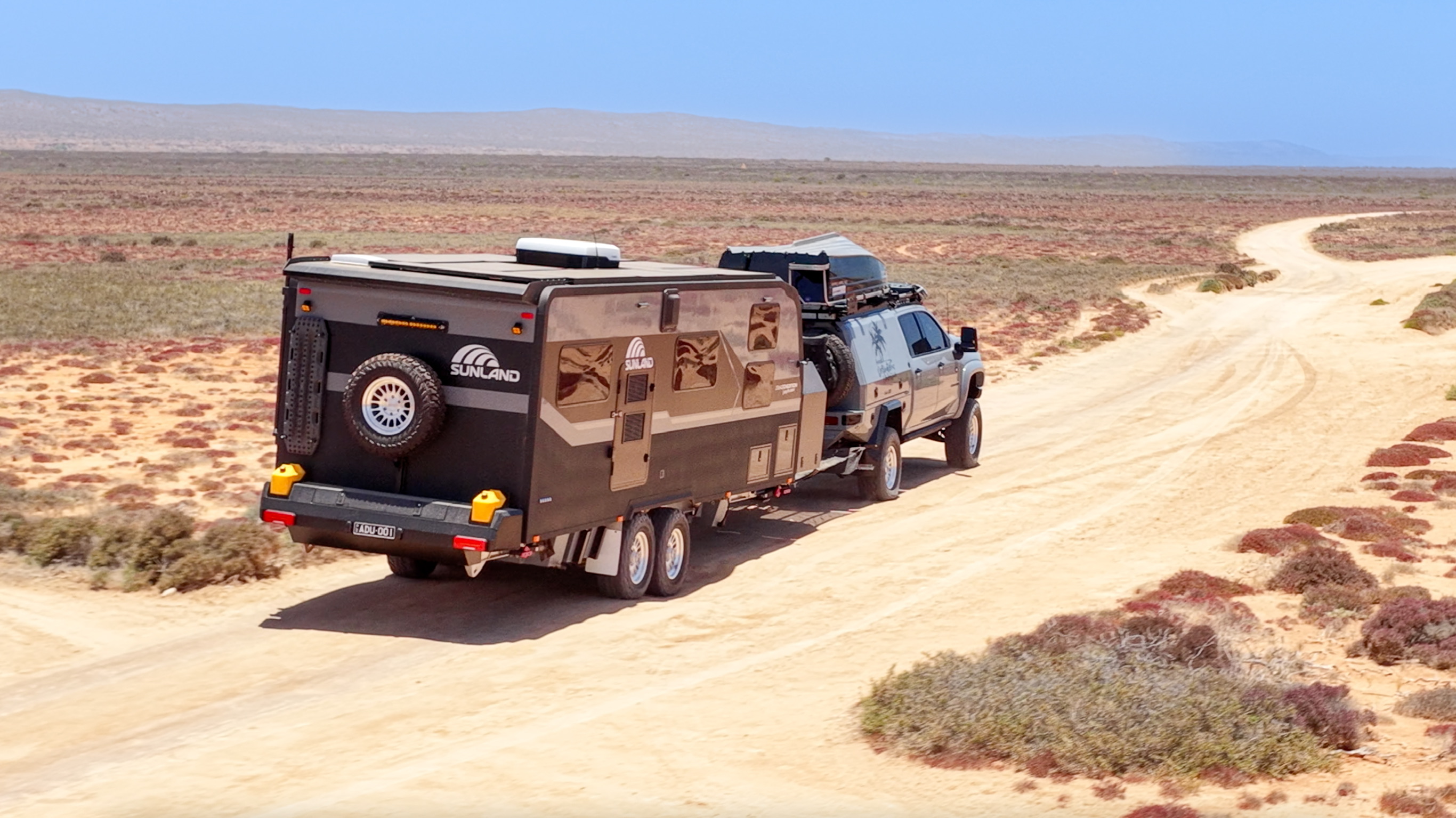
Always confirm both GVM and GCM ratings on your vehicle's compliance plate. An engineering upgrade pathway can change one without the other.
This is one of the most common questions we hear — and one of the most important to get right before you commit.
Gross Vehicle Mass
The maximum the loaded truck can weigh by itself — including passengers, fuel, accessories, cargo, and tow-ball download.
Gross Combination Mass
The maximum the truck plus the trailer can weigh together. This is a separate rating that governs the entire towing system.
The myth
"If I upgrade GVM, I automatically get more GCM too."
That is not how it works. GVM and GCM are related, but they are not the same thing. A GVM upgrade changes what the truck can carry by itself. It does not automatically change the combined mass limit for the truck-plus-trailer combination.
The real answer
- The final answer depends on the vehicle platform, certification path, and current engineering/regulatory constraints
- Some GVM upgrades can influence the GCM conversation — but it is never automatic
- Buyers must not assume that increasing one mass rating automatically solves the other
- The safest approach is to get both numbers assessed together before committing
GVM and GCM outcomes depend on the specific vehicle, certification pathway, engineering provider, state regulations, and current ADR requirements. This section is educational only.
What Big Dog Builds commonly engineers
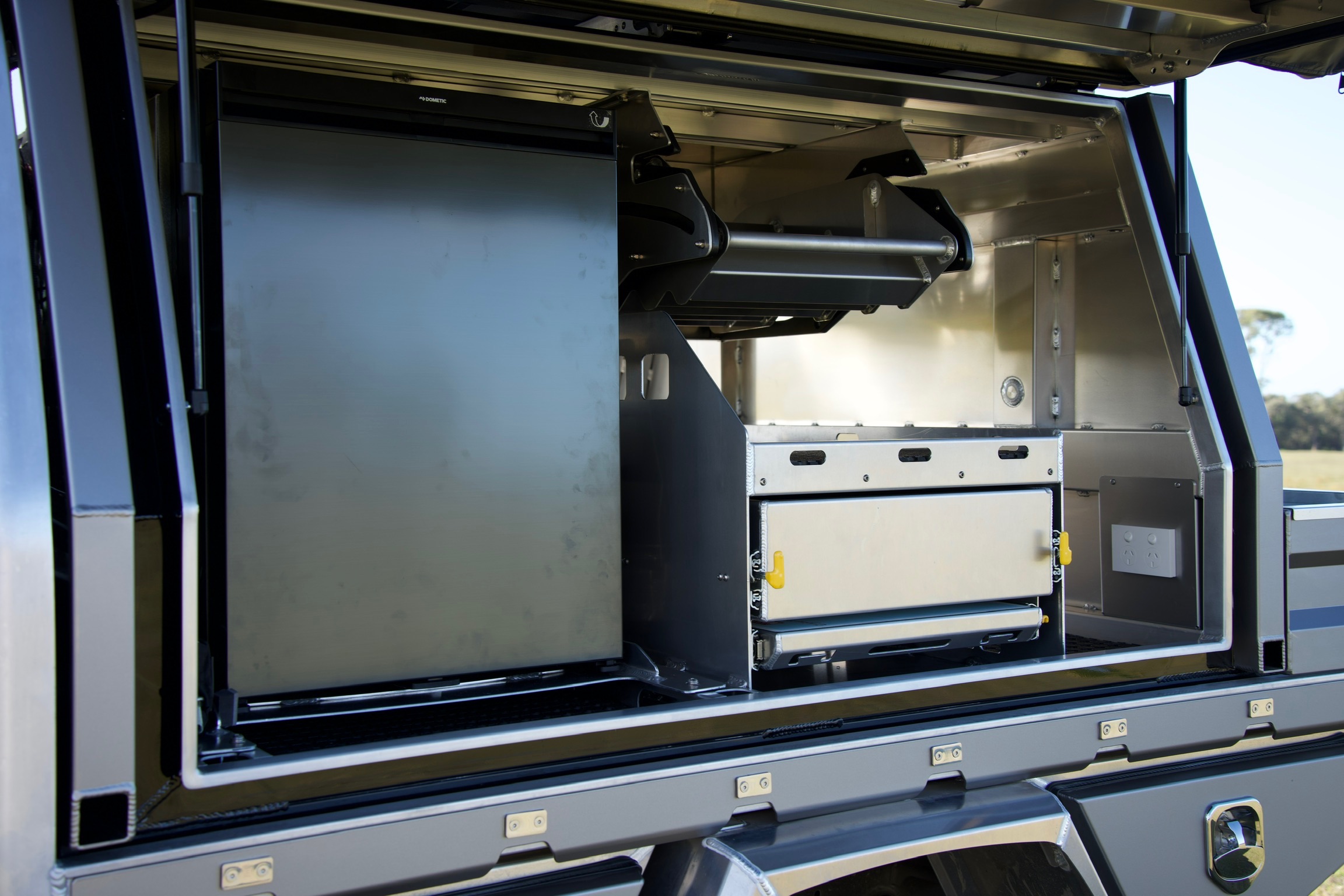
This is where the guide stops being generic. These are examples of the kinds of engineering pathways that commonly appear in our builds and quotes.
- NB1 / NA engineering — Keeping the truck under 4.5t GVM with optimised suspension, payload management, and compliant accessory planning.
- NB2 · 5,500kg GVM pathways — A common upgrade target for trucks that need more payload headroom for touring and towing setups.
- NB2 · 5,828kg GVM pathways — Platform-specific pathways that unlock significant additional payload on applicable vehicles.
- NB2 · 5,460kg GVM pathways — Available on some platforms where engineering certification supports this specific GVM target.
- NB2 · 5,800kg GVM pathways — Another common NB2 target, particularly relevant for heavy-tow and canopy-heavy builds.
- NB1 to NB2 changeover engineering — For trucks already registered at NB1 that need to move to NB2 — possible on some platforms, though easier to plan before purchase.
- Pre-rego 4.2T GVM kits (Chevy 1500) — A specific pre-registration pathway for the Chevrolet Silverado 1500, engineered before the vehicle is first registered.
Why this matters
This is not a brochure. These pathways reflect what we actually quote, engineer, and deliver week after week. Knowing they exist before you buy the truck means you can plan the right path from the start — instead of discovering it after delivery.
Engineering pathways depend on vehicle platform, state regulations, certification availability, and timing. Not all pathways are available on all vehicles.
Pre-rego vs post-rego · what changes?
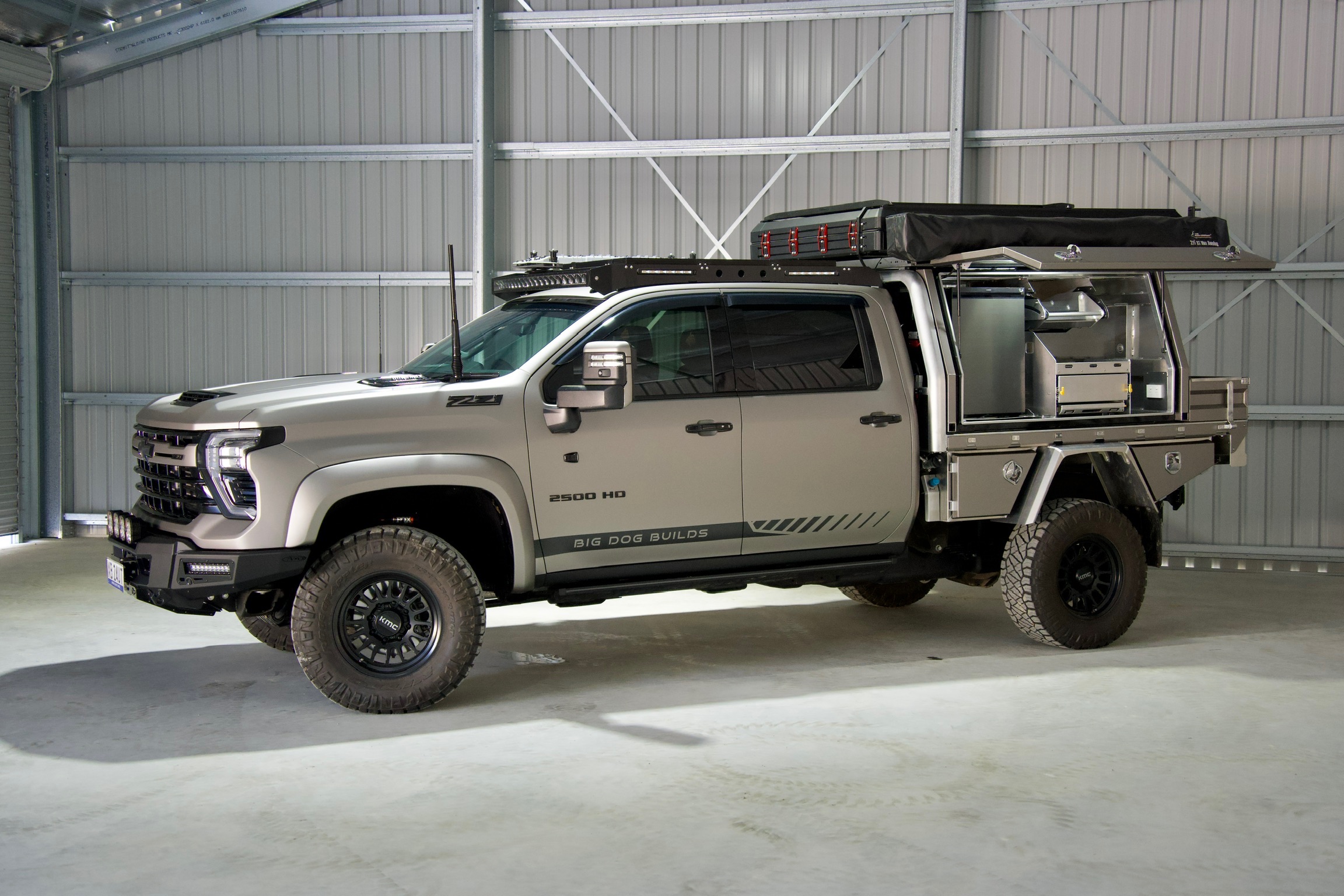
Pathways vary by state and platform. Some Australian states handle post-rego changes more easily than others — always confirm for your exact setup.
One of the smartest buying decisions often happens before you place the deposit — not after delivery.
Your easiest engineering path is often decided before you buy the truck.
- Often the simplest and most cost-effective engineering path
- The truck arrives correctly specified from day one
- Avoids compliance changeover complexity
- Buyer starts using the vehicle with the right GVM from delivery
- Still possible on many platforms — but can be more complex
- May involve changeover engineering and re-certification
- State-based differences in process and paperwork
- Often more expensive and time-consuming than pre-rego
Key takeaways
- Some buyers should order the truck correctly from the start — especially if they know a GVM upgrade is needed
- Post-rego changeover can become more complex depending on state, vehicle platform, and what's already been registered
- Interstate buyers should think about this earlier, not later — state differences matter
- The smartest path is often determined before the deposit, not after delivery
Registration, engineering and licensing pathways can vary by state and use case.
The legality and compliance conversation — in plain English
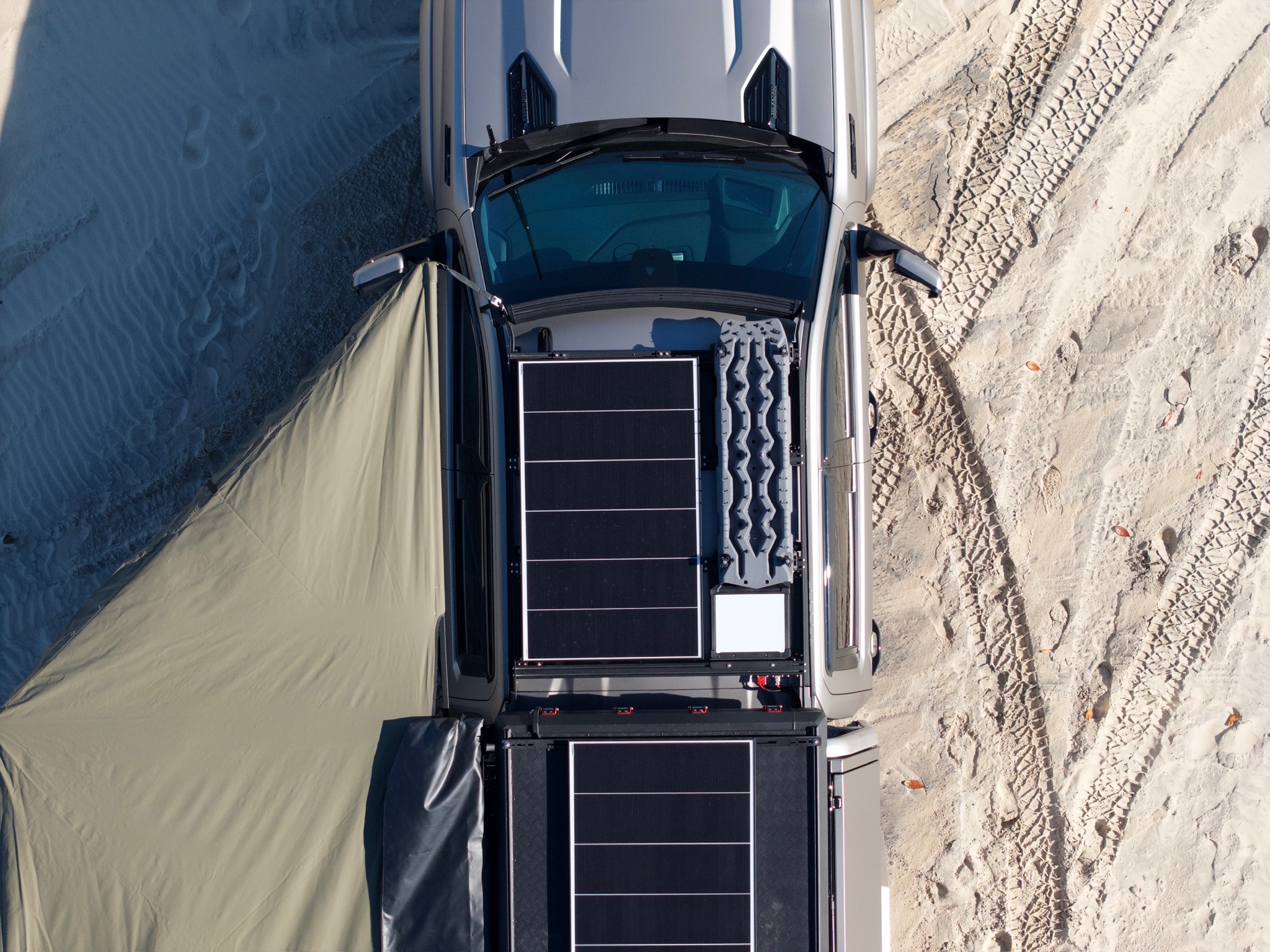
This part of the journey creates the most confusion, and for good reason. Buyers hear shorthand online, mix up towing claims with full setup reality, and assume that if a truck can technically tow something, the whole vehicle-and-trailer combination is automatically sorted.
That is not how good decision-making works.
The practical takeaway is simple: legality is not just about one headline number. It is about the whole setup, including the truck, the trailer, passengers, accessories, luggage, fuel, water, and how the vehicle is specified and certified in Australia.
You do not need to become an expert. You do need to ask the right questions early.
Before you leave a deposit, get clarity on:
- The real loaded trailer weight, not the optimistic version
- What the truck will carry in addition to the trailer
- Whether your intended accessories change the right vehicle class
- What the Australian compliance and registration pathway looks like for the truck you are considering
- Whether your licence, travel plans, and intended use create any extra considerations
Trucks available in Australia right now
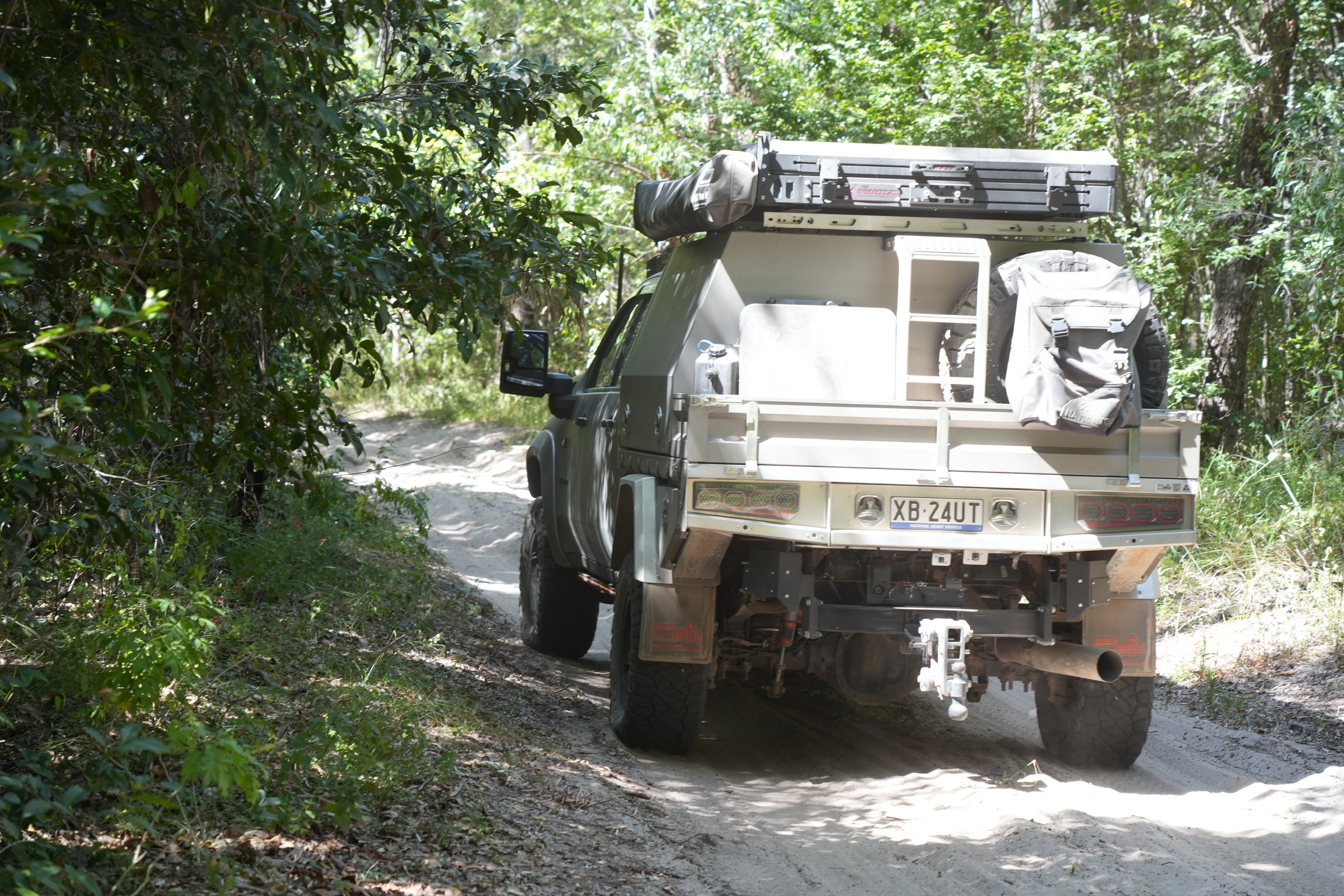
A use-case-first view of the current Australian full-size truck lineup, organised by class.
1500 class
Ford F-150
Best fit: Good mainstream full-size entry point. Ideal for many family/lifestyle buyers. Watch-out: Must not be assumed to handle every heavy van setup.
RAM 1500
Best fit: Premium cabin, strong towing platform. Watch-out: Payload margin under NB1 is consumed faster than many expect.
Chevrolet Silverado 1500 LTZ Premium
Best fit: All-rounder and lifestyle tow partner. Strong V8 presence.
Toyota Tundra
Best fit: Premium full-size buyer who wants refinement and Toyota trust. Watch-out: Kerb weight ~2,800kg — limited GVM margin.
2500 / HD class
RAM 2500
Best fit: Serious towing and touring. Strong torque platform.
Chevrolet Silverado 2500 HD
Best fit: One of the most relevant heavy-tow and compliance conversation vehicles in the Australian market.
3500 class
RAM 3500
Best fit: Maximum capability. Heavy tow, commercial, rural, max-confidence buyers. Watch-out: Maximum payload and maximum towing cannot be used at the same time.
Specifications and pricing are indicative and sourced from current public manufacturer data as of early 2026. Pricing and availability can change. Always confirm current details with the manufacturer or Big Dog Builds.
Quick comparison table
All current Australian full-size truck models side by side. Scroll to compare.
| Model | Class | Power / Torque | Max Tow | GVM / Class | Persona Fit |
|---|---|---|---|---|---|
| Ford F-150 | 1500 | 298kW / 678Nm | 4,500kg | NB1 | Modular Family Tourer |
| RAM 1500 | 1500 | 291kW / 556Nm | 4,500kg | NB1 | Family / Lifestyle |
| Silverado 1500 LTZ | 1500 | 313kW / 624Nm | 4,500kg | NB1 | Lifestyle All-Rounder |
| Silverado 1500 ZR2 | 1500 | 313kW / 624Nm | 4,200kg | NB1 | Premium Remote Explorer |
| Toyota Tundra | 1500 | 326kW / 790Nm | 4,500kg | 3,536kg | Premium Lifestyle |
| RAM 2500 | 2500 | 276kW / 1,084Nm | 4,500kg | NB1/NB2 | Full-Time Tow Tourer |
| Silverado 2500 HD | 2500 | 350kW / 1,322Nm | 4,500kg | NB1: 4,495kg · NB2: 5,148kg | Heavy-Tow / Compliance |
| RAM 3500 | 3500 | 313kW / 1,458Nm | Up to 8,000kg | NB2 | Max Capability |
Specifications are indicative. Always confirm current details before purchasing.
Which truck fits your persona?
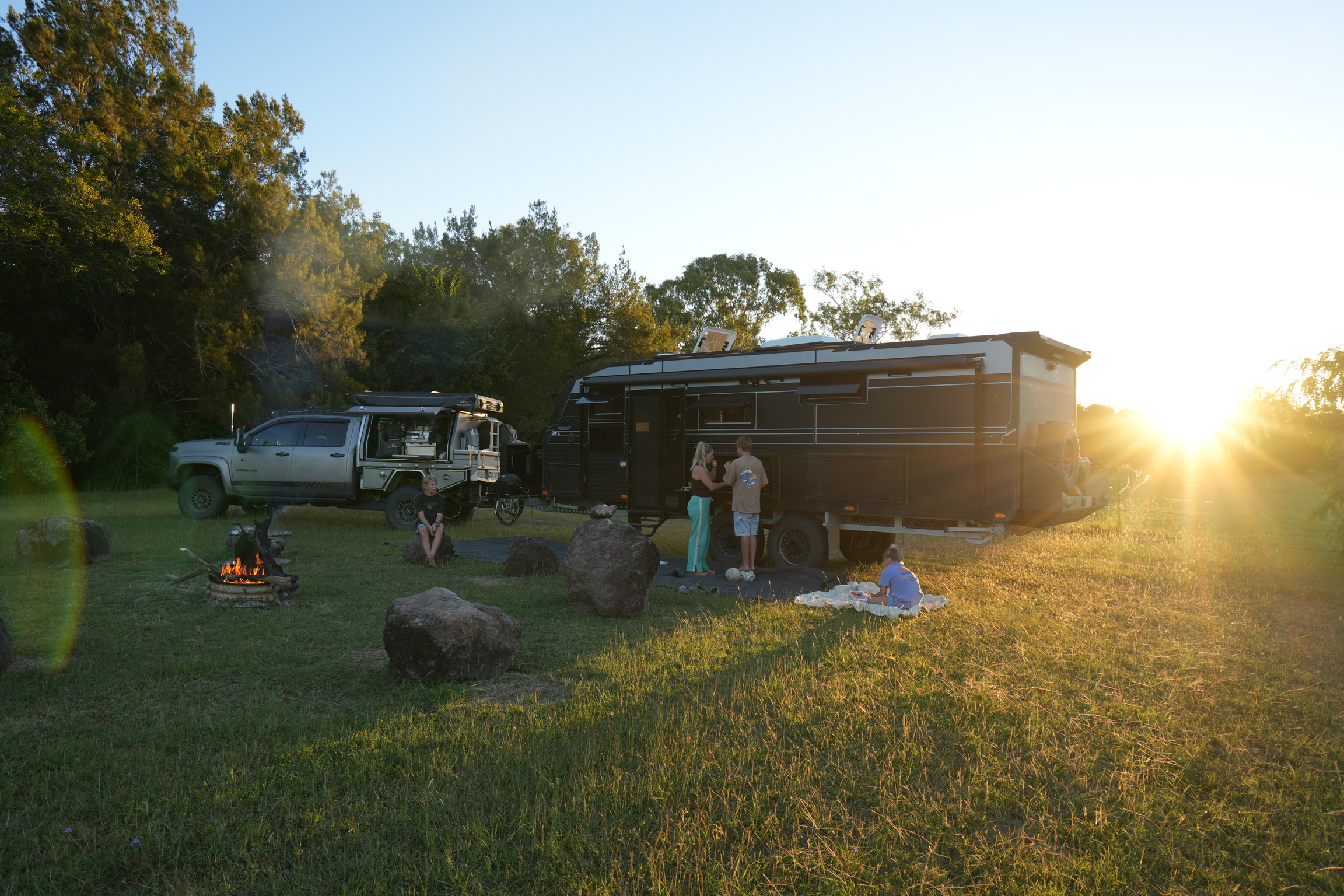
Different buyers need different starting points. Here's how the common buyer types map to truck class decisions.
- Modular Family Tourer · Starting point: 1500 / Tundra / lighter full-size. Watch payload carefully once the van gets bigger.
- Full-Time Tow Tourer · Starting point: often should compare 2500 very early. Payload math becomes critical for full-time touring weight.
- Premium Remote Explorer · Starting point: 2500 / 3500 more likely depending on load. Route, accessories, recovery gear push buyers higher than expected.
- Business-Backed Family Tourer · Starting point: varies. Often buys for a major trip. Wants the truck to look right AND work right.
- Rural Heavy-Tow Operator · Starting point: often 2500 / 3500 territory sooner than expected. Daily load is often the limiting factor.
- Commercial / Fleet Operator · Starting point: repeatability, spec sheets, compliance. Downtime + durability matter more than lifestyle features.
How to plan a smart build without doing everything on day one
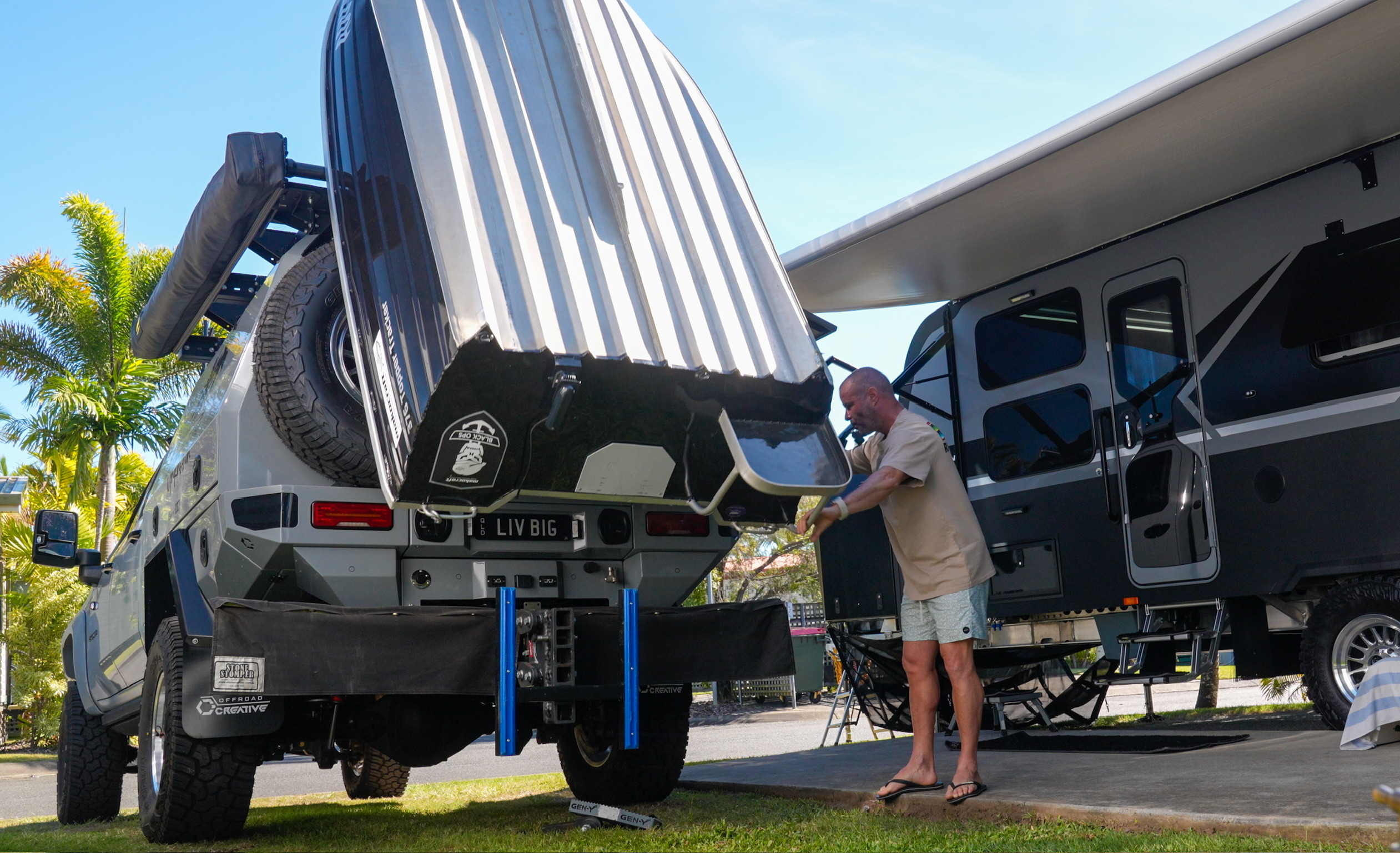
Premium refinement
Full lithium + solar · roof rack · awning · water systems · winch · satellite comms · top-shelf integration
Capability
Canopy or tray · dual battery · drawers · wheels & tyres matched to use · touring practicality
Foundation
Suspension / GVM assessment · bull bar · driving lights · tow bar & wiring · UHF · the truck's core job, done right
A good stage-one setup gets the truck working properly for its immediate role. A poor stage-one setup forces expensive rework later · the goal isn't to buy less, it's to buy in the right order.
Not every buyer needs a full premium build from the start. A good stage-one setup focuses on the truck's core job. A poor stage-one setup forces expensive rework later.
The goal is not to buy less. The goal is to buy in the right order.
Tow support, suspension thinking, essential protection, UHF and basic utility. Gets the truck working properly for its immediate role.
- Suspension upgrade / GVM assessment
- Bull bar and front protection
- Driving lights
- Tow bar and wiring
- UHF and basic communications
Storage, canopy / tray planning, power system growth, touring practicality.
- Tray or canopy selection and fitment
- Dual-battery or basic power system
- Wheels and tyres matched to use
- Drawer and storage systems
Remote-travel systems, full integration and optimisation.
- Full lithium power system with solar and inverter
- Roof rack and load platform
- Awning and camp setup
- Water systems and hot water
- Recovery gear and winch
- Communications and satellite tracking
The most expensive mistakes before you leave a deposit
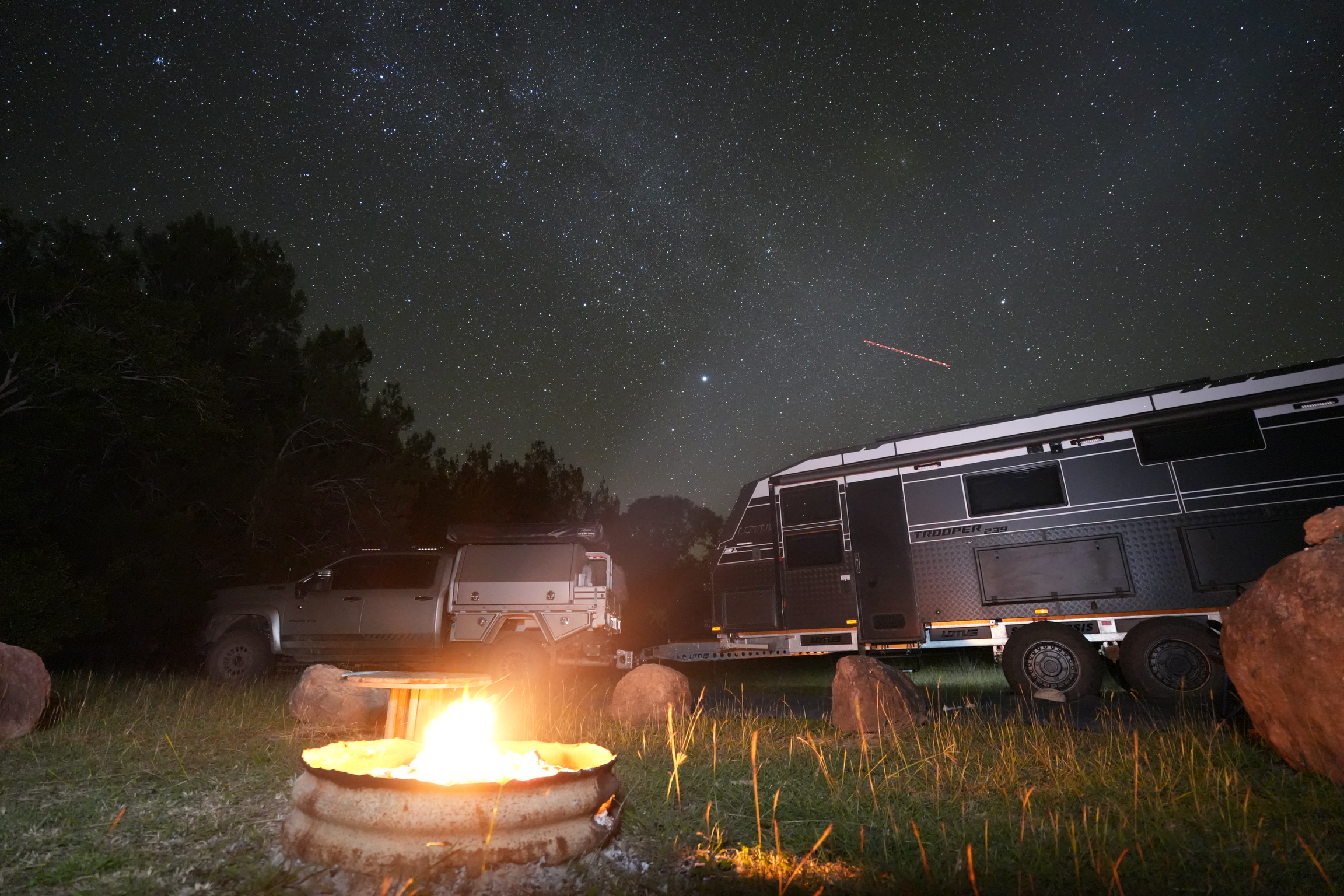
These are the traps we see again and again. Every one of them is avoidable with better information earlier.
- Buying to brochure towing capacity only. Towing capacity is one number. Payload, tow-ball download, GVM, and total loaded weight are the numbers that actually determine whether the truck is right.
- Ignoring tow-ball download. The weight your trailer pushes down onto the truck counts against your payload. Many vans deliver 250–400kg+ of tow-ball load.
- Choosing the wrong class for future accessories. Buying a 1500 when you know a canopy, lithium, long-range tank, and tow setup are coming.
- Assuming GVM and GCM are the same conversation. A GVM upgrade does not automatically change your GCM.
- Assuming every state handles post-rego changes the same way. Registration, compliance and engineering pathways vary between states.
- Ordering the wrong compliance path because nobody explained it. Some trucks should be ordered as NB2 from the start. Finding out after delivery is more expensive.
- Staying on a car-licence setup when the real use case says otherwise. Forcing NB1 when your real loaded weight says otherwise creates risk rather than convenience.
Real buyer questions we hear every week
These are drawn directly from the questions our buyers ask most often. Not generic truck FAQ — these are the real conversations.
- Can I keep it on a car licence?
- Do I actually need a 3500?
- What happens to payload once I add a canopy and tow a van?
- Should I buy it as NB2 from the start?
- Can I change NB1 to NB2 later?
- Does a GVM upgrade change GCM?
- How much tow-ball weight should I allow for?
- What happens if I tour interstate?
- Is a 1500 enough for my van, or am I fooling myself?
- What's the smartest staged build path if I can't do everything at once?
Your pre-purchase deposit checklist
Before you put money down, make sure you can tick every one of these.
- ☐ I know what I am towing, in realistic loaded terms
- ☐ I know what the truck will carry besides the trailer
- ☐ I understand what counts toward GVM — including tow-ball download
- ☐ I have thought about NB1 vs NB2 and what changes at 4.5 tonnes
- ☐ I have narrowed the right truck class first (1500 / 2500 / 3500)
- ☐ I understand the likely compliance and registration questions to resolve
- ☐ I know whether pre-rego or post-rego engineering makes more sense for my situation
- ☐ I know what needs to happen in stage one and what can wait
- ☐ I have spoken to a specialist before locking in the purchase
Quick worksheets
Use these prompts to organise your thinking before your next call or dealership visit.
Towing & load snapshot
- What am I towing most often?
- How heavy is it in realistic travelling trim?
- How often will I tow it?
- What else needs to live on the truck?
- Will I add a canopy, tray, power system, drawers, water, or recovery gear later?
- What is the estimated tow-ball download from my trailer?
Budget & staging snapshot
- What do I need on day one to use the truck properly?
- What can wait until stage two?
- Which parts should be chosen now so they do not need replacing later?
- What matters more to me: daily comfort, towing confidence, touring capability, or work durability?
GVM & compliance snapshot
- Do I need to stay under 4.5t GVM (NB1 / car licence)?
- Will my real loaded weight push me past that threshold?
- Should I consider ordering as NB2 from the start?
- What state will the truck be registered in?
- Will I travel interstate — does that change anything?
Truck class snapshot
- Am I a 1500, 2500, or 3500 buyer based on my real use case?
- Is comfort and daily driving more important, or towing confidence?
- Will my needs grow in the next 1–2 years?
- Have I considered the right class before the brand?
What to do next
Once you are clear on the job, the class, and the likely build path, the next step is not guessing harder. It is having the right conversation before you commit.
A good pre-purchase call should help you narrow the truck class, pressure-test the intended use, flag any obvious compliance questions, understand your GVM and payload position, and identify what stage one really needs to include.
Bring your intended trailer, use case, rough budget, and where you are in the journey. The clearer the inputs, the stronger the recommendation.
General information only. Requirements vary by vehicle, load, state, and intended use. Always confirm technical, engineering, compliance, and legal details for your exact setup. Pricing is indicative and subject to change.